
Kneel First

Praying for those in governmental leadership is not dependent upon who they are or how they rule. The first century culture was not Christian and often not Christian-friendly. Even a cursory reading of First Century Roman history reveals unmentionable behaviors and attitudes at the highest levels of government. And through time those in such lofty positions would permit, if not initiate, persecution against churches.

Yet the Apostle Paul pointedly directs Timothy and the church to pray “for kings and all who are in high positions that we may lead a peaceful and quiet life, godly and dignified in every way.”

Such prayer is not for our own tranquility, but for the sake of the Gospel.

“This is good, and it is pleasing in the sight of God our Savior, who desires all people to be saved and to come to the knowledge of the truth. For there is one God, and there is one mediator between God and men, the man Christ Jesus, who gave himself as a ransom for all, which is the testimony given at the proper time.”

Will you join me in praying 2 Timothy 2:1-6 in our cultural context for the sake of the Gospel of Jesus Christ? Will you so pray for the President, Senators, Representatives, Justices and Judges of the United States? Will you so pray for the leadership of your state? Will you so pray for the leadership of your county or parish? Will you so pray for the leadership of your city?

There is much to be said from the Bible in the midst of this present culture. But let us not rise to speak without first having knelt to pray.

And so I am praying for those in leadership whose names I do not know, but also specifically for names I do know and for those I personally know. Make your list and pray.

The President of the United States Barack Obama and Vice President Joe Biden

The United States Congress
Senator John Boozman
Senator Tom Cotton
Representative Bruce Westerman

The United States Supreme Court
Chief Justice John Roberts
Justice Samuel A. Alito, Jr.
Justice Stephen G. Breyer
Justice Ruth Bader Ginsburg
Justice Elena Kagan
Justice Anthony Kennedy
Justice Sonia Sotomayor
Justice Clarence Thomas

Judges of the Federal Court System

The Governor of Arkansas Asa Hutchinson

The Arkansas Legislature
Senator Bruce Malloch
Representative Lane Jean

The Arkansas Supreme Court
Chief Justice Jim Hannah
Associate Justice Robin F. Wynne
Associate Justice Courtney Hudson Goodson
Associate Justice Josephine L. Hart
Associate Justice Paul E. Danielson
Associate Justice Karen R. Baker
Associate Justice Rhonda K. Wood

Judges of the Arkansas Court System

Columbia County Judge Larry D. Atkinson and Justices of the Peace

Magnolia Mayor Parnell Vann and City Council
 

Posted in Uncategorized | Leave a comment

The Confederate Flag and the Kingdom of God

The Confederate Flag is a part of American history, a reminder of a bloody era in which the nation was nearly torn asunder. It conjures images of rebels in grey seceding and then defending their native Virginia or Tennessee or other home state south of the Mason Dixon line from those “Damn Yankees.” How much of those images is truth or fiction has been blurred to some degree by the time that has passed and by myths and legends that have populated our culture.

Somehow through the often tumultuous generations since the civil strife ended, the “Rebel Flag” has endured along with the still expressed sentiment that “the South will rise again.” Against what and for what it would rise again I am not entirely sure. At times this flag from the past seems to be little more than a sign of “good ol’ boy” rebellion for young men who want down a six pack, shoot guns and “stick it to the man” Hazzard County style. And yet at other times, tragic and sad times, it is a rallying banner for something much more sinister.

I am a Rebel alum. I attended and graduated from Southside High School in Fort Smith, Arkansas. We were the Southside Rebels complete with a Johnny Reb mascot, the Confederate Flag and grey soldier uniforms for the band. And, yes, our fight song was Dixie. And, believe it or not, Southside’s hometown rival was Northside. No, they weren’t the Northside Yankees, but they were predominantly black and the Rebels of Southside were predominantly white. And when the Rebels invaded the Northside football stadium, both the imagery and the reality were clear. It wasn’t just a flag, a uniform and a song. Prejudice and resentment flowed freely both ways. Our cross-town rivals were sometimes referred to as the Northside N******. I don’t know how they referenced us, but I’m betting it wasn’t affectionate.

Thirty years later I find myself a pastor of a church in an old genteel southern town where the Magnolias blossom, the humidity stifles, people still wave and church bells ring. And though we are a two day drive from Charleston, in our hearts we felt the reverberation of shots fired there in a Wednesday night prayer meeting.

In the aftermath, Johnny Reb’s Flag is at the center of continuing ethnic strife and political controversy. The question on everyone’s tongue has been whether or not that flag should fly at state capitols and local high schools. State and local leaders will discuss and decide the question. But in the meantime I have a question for the Church: as believers in Jesus and citizens of His heavenly Kingdom, does the Bible give us any direction on how to view the Rebel Flag, particularly in view of ongoing prejudices?

First, understand that as a preacher of the Gospel of Jesus Christ I am an emissary of a King and His Kingdom. And the King’s message is Reconciliation.

Therefore, we are ambassadors for Christ, God making his appeal through us. We implore you on behalf of Christ, be reconciled to God.  (2 Corinthians 5:20)

The Bible is clear – sin had irreparably separated us from God, at least from the human perspective. But then God did the unthinkable for us through Jesus.

For our sake he made him to be sin who knew no sin, so that in him we might become the righteousness of God.  (2 Corinthians 5:21)

God reconciled us to Himself by the life, death, burial and resurrection of His only begotten Son, Jesus. Therefore, as an emissary of the Kingdom and on behalf of the King, I declare to all people everywhere, “Be reconciled to God.”

Reconciled to God, we are reconciled to one another. As Gentiles (all non-Jews regardless of ethnicity), we were at one time “separated from Christ, alienated from the commonwealth of Israel and strangers to the covenants of promise, having no hope and without God in the world.” (Ephesians 2:12)

What follows in Ephesians 2:13-22 is lengthy, but absolutely essential.

But now in Christ Jesus you who once were far off have been brought near by the blood of Christ. For he himself is our peace, who has made us both one and has broken down in his flesh the dividing wall of hostility by abolishing the law of commandments expressed in ordinances, that he might create in himself one new man in place of the two, so making peace, and might reconcile us both to God in one body through the cross, thereby killing the hostility. And he came and preached peace to you who were far off and peace to those who were near. For through him we both have access in one Spirit to the Father. So then you are no longer strangers and aliens, but you are fellow citizens with the saints and members of the household of God, built on the foundation of the apostles and prophets, Christ Jesus himself being the cornerstone, in whom the whole structure, being joined together, grows into a holy temple in the Lord. In him you also are being built together into a dwelling place for God by the Spirit.

Do you see it? Through the cross people from all Gentile ethnicities and Jews are reconciled to God and to one another. The cross kills hostility, both between humanity and God and among humanity between ethnic groups. Regardless of ethnicity believers are fellow citizens of the Kingdom of God. And in a town like Ephesus, they are together members of the household of God, the visible Church. As an earthly colony of the heavenly Kingdom, the local Church is not only to declare reconciliation, but actually be a place of reconciliation.

Here there is not Greek and Jew, circumcised and uncircumcised, barbarian, Scythian, slave, free; but Christ is all, and in all. Put on then, as God’s chosen ones, holy and beloved, compassionate hearts, kindness, humility, meekness, and patience, bearing with one another and, if one has a complaint against another, forgiving each other; as the Lord has forgiven you, so you also must forgive. (Colossians 3:11-13)

Wow. This brings clarity of focus to our view of the Confederate Flag and ongoing prejudices. For how could we, as fellow citizens of the Kingdom and as one in Christ in His Church, embrace a symbol from this world that bears the perception or reality of hatred against our brothers and sisters in Christ?

And how shall we call all ethnicities to be reconciled with God while bearing any sign of ill will toward them?

I am, at least to some degree, a son of the South. I got a thrill from Bo and Luke Duke driving the General Lee and played Dixie with pride in my Rebel band uniform. I liked the feel of rebellion. I still do. And the lore of a long ago failed insurrection so easily feeds that feeling.

But a funny thing happened on the way to heaven. The King who bid me come also bid me leave. Coming to Him and His Kingdom meant leaving myself and my world. My rebel spirit and prejudices belong to a world I am no longer meant to inhabit.

I seriously doubt the South will rise again. Yet I am absolutely confident that the Kingdom of God will because Jesus has. And in the capital of His Kingdom there will be a tree – the Tree of Life. And “the leaves of the tree will be for healing the nations” – the healing of the ethnics (Revelation 22:2). The Kingdom of God will be populated with people redeemed by the blood of the Lamb from every tribe and language and people and ethnic group. Oh that God would grant us a glimpse of such reconciled worship in His churches today.

Posted in Uncategorized | Leave a comment

This Sunday at FBC Magnolia (May 24, 2015)

How desperately we need our Father’s guidance! Our flesh is prone to sin and our adversary is seeking our harm. Jesus teaches us to cry out to and rely on God for His leadership and protection. The good news is that (1) He is able – His name is hallowed; and (2) He will – He is our Father who loves and cares for us.

In 1758 at the age of 23, Robert Robinson penned the words to the hymn, “Come, Thou Fount.” It is a hymn of petition. It declares the necessity of God’s faithfulness: “here I raise mine Ebenezer – Hither by thy help I’m come.” And it confesses our weakness: “Prone to wander – Lord, I feel it – Prone to leave the God I love.” The words proved true in Robinson’s life with lapses into sin and instability.

The story is told that Robinson was one day riding a stagecoach when he noticed a woman deeply engrossed with a hymn book. During an ensuing conversation the lady turned to Robinson and asked what he thought of the hymn she was humming. Robinson burst into tears and said, “Madam, I am the poor unhappy man who wrote that hymn many years ago, and I would give a thousand worlds, if I had them, to enjoy the feelings I had then.” (Kenneth Osbeck, 101 Hymn Stories)

O to grace how great a debtor daily I’m constrained to be!
Let Thy goodness, like a fetter, bind my wandering heart to Thee.
Prone to wander, Lord, I feel it, prone to leave the God I love;
Here’s my heart, O take and seal it, seal it for Thy courts above.

Join us Sunday as we learn to pray for and live under the protecting hand of our Father!

Posted in Uncategorized | Leave a comment

This Sunday at FBC Magnolia (May 17, 2015)

Be kind to one another, tenderhearted, forgiving one another, as God in Christ forgave you. (Ephesians 4:32)

As we progress through the Christian life we live under the imperative to become kind and tenderhearted toward one another. The more we mature in Christ, the more pleasant we will be with one another and the more compassion we will have for one another.

But such progress only occurs in the context of a lifestyle of forgiveness born of a deepening personal understanding of God’s grace.

The subtle, destructive danger that we might think that we somehow merited God’s mercy is ever present with us. This arrogant attitude is well camouflaged behind religious activity, but betrays itself through bitterness, gossip, criticism and a judgmental spirit against those perceived not so special as we are.

How we see God’s forgiveness of ourselves in Christ will determine how pleasant and compassionate we are with others. The gracious are those who are themselves amazed by grace.

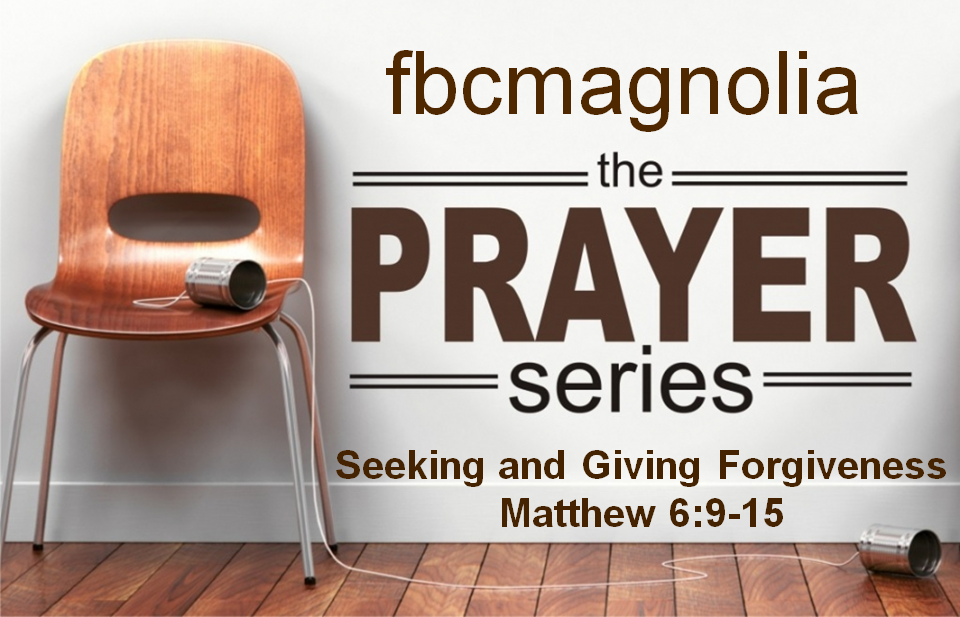
Join us Sunday as we learn to pray, “…forgive us our debts, as we also have forgiven our debtors.” (Mat 6:12)
04 seeking and giving forgiveness

Posted in Uncategorized | Leave a comment

The Model Prayer and Our Unhappiness

A lot of us are unhappy. We wouldn’t necessarily admit to it. It’s not that we don’t have moments of happiness. And it’s not that we are morosely sad. But overall our lives feel empty. And we can’t figure out why. We check all the religious boxes – church, family and being nice to the neighbor – yet find ourselves restless and longing for more.

For a lot of us, this pattern of unhappiness is easy to identify, if we are honest with ourselves.

(1) Life is about us. We are self-centered. We are the sun at the center of our solar system.

(2) We want what we want. Since life is about us, our desires matter most. And it’s unfair if life isn’t what we want it to be.

(3) As a result of 1 and 2, we deal with a lot of anxiety. Things are never what we want them to be – circumstances, money, husband, wife, kids, job, city, house, neighborhood, car, health…you get the picture. And to make matters worse, the harder we try to control these things, the worst they become and the greater our anxiety grows.

(4) 1, 2 and 3 lead to blame. If we are racked with anxiety because our lives are not what we want them to be, it must be somebody else’s fault – husband, wife, kids, parents, boss, church, neighbor, government, God…you get the picture. We live on the edge of conflict. Our finger is always ready to point.

(5) Muddled and mired in anxiety and resentment, we don’t think clearly. How we choose to deal with life defaults to worldly philosophy. Without resistance we fall into the snares of the devil – greed, lust, drunkenness, drugs, self-pity, bitterness, abusiveness…you get the picture. Oh we know it’s not right. But we just don’t care anymore. After all, we’ve rationalized that it’s not our fault.

(6) We go to bed at night and wake up in the morning unhappy. No light in our eyes. No smile on our lips. No song in our heart. Unhappy.

So what does Jesus’ teaching on prayer have to do with our unhappiness? Well, nothing and everything. Nothing because Jesus’ teaching focuses us on the Father, not on our happiness or unhappiness. And everything because we will not experience happiness unless we are focused on the Father.

Notice how Jesus’ teaching on prayer radically changes us even if our circumstances remain the same.

(1) Prayer centers our lives on our holy, heavenly Father. In all His glory, our Father who loves us and who is perfect in every conceivable and inconceivable way, is the center of the universe. Not us.

(2) Prayer surrenders our lives to our holy, heavenly Father. He who is above all, sees all, knows all and is sovereign over all, loves us as our Father. Because of who He is, we trust every aspect of our lives to His will, surrendering all that we are to His rule and reign over us.

(3) As a result of 1 and 2, we daily rely on our Father for our every need. Our needs are still very real, but because of who He is, we are content with what He provides. Our Father is sufficient for us.

(4) 1, 2 and 3 lead to an ever-deepening understanding and experience of grace. The more we learn of His love and His perfections, the more we realize how unlovable and imperfect we are and the more we delight in His grace. And thus overwhelmed by His grace, we are transformed to be gracious to others.

(5) Worshiping the Father in the beauty of His holiness and love, surrendered to His perfect will, content with all that He is and what He provides, overwhelmed by His amazing grace, we want our lives to make much of Him. So knowing that our hearts are prone to wander, we daily cry out for His guidance and His protection that we might live for His glory.

(6) Filled with the awe and wonder of our Father, we go to bed and wake up delighted in Him. Our lives reflect His glory. His praise is on our lips. Our hearts are filled with joy.

As John Piper reminds us, “God is most glorified in us when we are most satisfied in Him.” And that’s what Jesus’ teaching on prayer does. Praying this way glorifies God, putting the focus on Him, not us. When we do that, we learn to be happily content in Him regardless of the circumstance. And when we are so happily content in Him, others see the contentment wrought in us by the Father’s love and care and He is glorified.

So learn to pray like this.

Our Father in heaven,
Hallowed be Your name.
Your kingdom come.
Your will be done
On earth as it is in heaven.
Give us this day our daily bread.
And forgive us our debts,
As we forgive our debtors.
And do not lead us into temptation,
But deliver us from the evil one.
For Yours is the kingdom and the power and the glory forever. Amen.

(Matthew 6:9-13 NKJV)

Posted in Uncategorized | Leave a comment

Tepid on the Tongue of Christ

Laodecia. It was a wealthy and worldly place. And the church had made itself at home there. Their lives had become defined by what they had acquired rather than by whom they claimed to follow. It doesn’t matter how much they had acquired (we are never told), but how they perceived themselves in their acquisition. However little or much, they had enough to think themselves self-sufficient.

The problem was that church was never designed to be self-sufficient, but Jesus-dependent. Not then. Not now. And a church that deems itself self-sufficient leaves a bad taste in Jesus’ mouth. (Revelation 3:14-22)

The Condition
“So, because you are lukewarm, and neither hot nor cold, I will spit you out of my mouth.” (16)

While some like hot coffee and others like ice coffee, few like tepid coffee. It’s bitter. It’s not palatable. I instinctively want to spit it back into the cup. Jesus was about to spit out the lukewarm Laodecian church. But why?

The Cause
For you say, I am rich, I have prospered, and I need nothing, not realizing that you are wretched, pitiable, poor, blind, and naked. (17)

Three statements reveal the cause of the Laodecians’ tepid spiritual condition.

1. “I am rich.” They didn’t merely claim to have riches, but they actually identified themselves as rich. Who they were was emphatically defined by what they had.

2. “I have prospered.” They were who they were – rich – because of themselves.

3. “I need nothing.” They were self-sufficient. Their self-sufficiency, however, was self-delusion. Their perception of themselves was wrong. Rather than seeing a rich, self-sufficient church, to be envied by others, Jesus saw a church that was wretched, to be pitied, beggarly poor, blind and shamefully naked.

The cause for their condition really had nothing to do with what they had (or didn’t). Wealth is neither a sign of church success or failure. How God prospers us materially is God’s business to be used in whatever measure He gives it for His glory.

The cause for their condition was their love for self and mammon that left no room for Jesus. They were a Christ-less church of Christ. And Jesus was about to spew them out into the world they loved.

The Counsel
I counsel you to buy from me gold refined by fire, so that you may be rich, and white garments so that you may clothe yourself and the shame of your nakedness may not be seen, and salve to anoint your eyes, so that you may see. (18)

Jesus counters their self-centered materialistic focus with some advice: acquire eternal wealth.

Buy gold refined by fire. The genuineness of our faith in Jesus is tested by the fiery trials of this world. While trusting in this world’s possessions may seem expedient for the moment for the sake of personal comfort, only trusting Jesus with the fiery trials that will inevitably come produces eternal benefit. (1 Peter 1:7)

Buy…white garments. We cannot love the world without becoming stained by the world. Those who desire to be rich fall into a snare because the love of money is a root of all kinds of evil. (I Timothy 6:9-10) It is those clothed in righteousness who will walk with Jesus. (Revelation 3:4)

Buy…eye-salve. Trusting mammon blinds us to our spiritual reality. We need discernment that we might see our true condition before God and ready ourselves for eternity.

The Cure
Those whom I love, I reprove and discipline, so be zealous and repent. Behold, I stand at the door and knock. If anyone hears my voice and opens the door, I will come in to him and eat with him, and he with me. (19-20)

How could they or how can we make such purchases? The spiritual cannot be bought with the material. As the Lord once invited spiritual paupers to come, buy and eat (Isaiah 55:1-4), so now Jesus compels those described as wretched and poor to make purchases far beyond their means. How?

Awakened by the love of Christ, we are to zealously and penitently receive His reproof and discipline. Even more passionately than we have pursued the world, we are to turn toward and pursue Jesus. He becomes our identity and His grace our prosperity. Regardless of our earthly material circumstance, we wake each day keenly aware of our desperate need for Him and His provision, crying out, “Give us this day our daily bread!”

At the doors of how many churches does Jesus stand, knocking and calling out to anyone inside who will hear His voice? Churches comfortable in their culture, at ease in their possessions, sufficient for themselves, identified with their surroundings. Churches tepid on the tongue of Christ, about to be spewed into the world they love.

May we hear our Savior at the church’s door and open wide our hearts to Him to whom the church belongs. Christ, come and reclaim us as your own!

Posted in Uncategorized | Leave a comment

This Sunday at First Magnolia (May 3, 2015)

“Arm-Pit Bread” was a common daily staple in the villages of Romania. Small stores would sell loaves of bread with no preservatives. So each day a trek was made to acquire the daily bread, often carrying the crusty loaf home held firmly up under the arm pit. Hence it’s name given by the missionary, “Arm-Pit Bread.”

Jesus teaches us to pray, “Give us this day our daily bread.” It’s difficult for many of us to see Jesus’ point. We live in a land of luxury where preservatives keep bread fresh for over a week. And with bread in the bank, we don’t really need to ask anybody to give us bread. Bread is cheap. We’ve got bread covered for the foreseeable future.

Our self-sufficiency blinds us to the deep and abiding truths found in those seven simple words of prayer and explains why so many of us who claim the holy God and creator of the universe as our Father still live anxiety racked lives.

Come this Sunday as we dig deep into these seven words. Together we will glory in our holy heavenly Father and find rest in His all sufficient grace.

I can’t wait to see you this Sunday at First!

Posted in Uncategorized | Leave a comment

This Sunday at First Magnolia (April 26, 2015)

02 trusting your father

Your Kingdom come
Your will be done
On earth as it is in heaven.

This prayer to the Father in heaven is sometimes couched as a hopeful but doubtful wish (if it only could be!) or as a reality for a distant future when Jesus comes to “give ’em what for.” Far too often we recite this prayer taught by Jesus (Matthew 6:9-13) with little thought to any present demands it places upon us. Indeed prayer in general is often nothing more than words said a particular way in a particular setting for the sake of conscience, ritual or others, rather than a meaningful conversation with the Father whose name is hallowed.

Sunday we will learn that the meaning of this prayer involves the unconditional surrender of our lives to our Father’s reign and commitment to doing our Father’s will. Such surrender and commitment are not forced upon us by a heavy hand, but drawn from us by our Father’s eternal love and holiness. We “see what kind of love the Father has given to us, that we should be called the children of God” (1 John 3:1) and we love Him. We stand in awe of our Father’s holiness – all-knowing, all-powerful, all-wise, inescapable, perfectly righteous, perfectly just, beautiful beyond compare – and we trust Him.

Having prayed, “Our Father in heaven, hallowed be Your name,” how can we not pray, “Your Kingdom come, Your will be done on earth as it is in heaven”?

I hope you’ll join us Sunday as we learn, pray and surrender to our Father.

Book Recommendations
Prayer: Experiencing Awe and Intimacy with God by Timothy Keller
Just Do Something: A Liberating Approach to Finding God’s Will by Kevin DeYoung

Posted in Uncategorized | Leave a comment

The Mission

The following is an excerpt from this past Sunday’s sermon at First Baptist Magnolia as I talked about our mission and moving forward with the mission in different areas of church life.

THE MISSION
The glory of God and the good of others through the Gospel of Jesus Christ.
(1 Corinthians 10:31-32)

The Glory of God
We seek to live and speak so that in everything we do and everything we say we make much of the holy, righteous, true and living Triune God who has loved us with an everlasting love.

The Good of Others
We seek to live and speak for the eternal good of others that many may be saved, both at home and abroad, for this generation and each successive generation until the return of Jesus.

The Gospel of Jesus Christ
The glory of God and the good of others is necessarily and essentially tied to the eternal deity, virgin birth, sinless life, sacrificial death, burial, triumphant resurrection, ascension, intercession and promised return of Jesus Christ, the eternal Son of God in whom the Father is well pleased and the Son of Man by whose death we are forgiven of sins, justified before the Father and granted eternal life as children of God.

MOVING FORWARD WITH THE MISSION

Structure
We will engage ministry leaders throughout the church in examining what we do, how we do it and why we do it in view of the mission, asking, “Does _____ further the church in glorifying God and doing good for others through the Gospel of Jesus Christ?” If not, why do we do it?

Spending
We will examine how we spend the Lord’s money in light of the mission, asking, “Do our expenditures glorify God and do good for others through the Gospel of Jesus Christ?” If not, why do we spend it?

Spiritual
We have begun the process of reviewing how the church is accomplishing the mission in three areas: discipleship, worship and being on mission at home and abroad.

As part of our review process, we will also be developing a proposed church constitution and bylaws that will adequately address our identity and beliefs in this quickly shifting culture and provide a Biblical framework for succeeding generations until the Lord returns.

That is my mission, my agenda, for the immediate future of FBC. I cannot tell you exactly what this church will look like a year, five years or ten years from now. Will it look different? Yes. How we do what we do will continually change to some degree as we, in our human imperfection, continually strive to perfectly glorify God and do good for others through the Gospel of Jesus Christ.

In seeking to glorify God and do good for others through the Gospel of Jesus Christ, I am not interested in devising a scheme to reinvent FBC in my image, your image or the culture’s image. Yes, there are things we do and ways that we do things that I don’t like at FBC. The same is probably true for you. But FBC is not our church. It is Jesus’ church. And the greatest need of FBC is not a makeover of how we do things, but a refreshed understanding of who we are and whose we are.

Our great need is a heaven sent, Holy Spirit empowered, Gospel centered, God glorifying revival that spills over from this church into a spiritual awakening in our city, county and beyond for the glory of God and the good of others through the Gospel of Jesus Christ.

Posted in Uncategorized | Leave a comment

This Sunday at First

Time’s fun when you’re having flies…or something like that. Regardless, it’s been almost a year since Cindy and I accepted the call to FBC and ten months since beginning ministry. Hard to believe how quickly the months have passed.

The main focus of these months has been to get to know fellow pastors, lay leaders and as many in the church as possible while preaching the Gospel. While I have familiarized myself with the structure of ministry at FBC, getting to truly know the church is about getting to know the people. After all, the church is the people, not buildings and budgets.

I admittedly still have a lot to learn. But it is time to take the next step. This Sunday I will share my heart for the immediate future of FBC. I hope you will make every effort to be present.

An essential element in this next step is prayer. In calling the church to prayer I will spend the next several weeks teaching on prayer. While prayer is absolutely essential in the life of a believer and a church, it is often underutilized or assigned a lesser place in our priorities. Sometimes because we simply don’t understand what it is. Together we will learn together and pray together.

I look forward to seeing you this Sunday!

Posted in Uncategorized | Leave a comment